A corporate video should not disappear into a shared drive after one internal presentation. It should help your team launch a campaign, clarify a message, build trust with stakeholders, support sales conversations, or bring an event back to life. That is the standard corporate video production should meet: clear purpose, professional execution, and content your organization can put to work immediately.
For marketing managers and communications teams, the challenge is rarely deciding whether video matters. The challenge is producing the right video without adding another complicated project to an already full calendar. A reliable production process turns a broad request into a focused plan, a well-run shoot, and finished assets that fit the channels where your audience will see them.
Start Corporate Video Production With the Outcome
The best corporate videos begin before a camera is selected or a location is booked. They begin with a practical question: what needs to happen after someone watches this?
The answer may be different for every project. A brand film may need to create confidence before a major launch. An employer brand video may need to make a candidate picture themselves on your team. A customer story may need to give a sales team credible proof. An internal leadership message may need to make a complex change feel direct and human.
Those outcomes shape every creative decision. They determine the audience, the tone, the questions asked on camera, the locations that add meaning, and the footage needed to support the story. Without that early clarity, even beautifully shot material can feel generic.
A useful project brief defines the audience, the core message, the action you want viewers to take, the distribution channels, and the timeline. It should also name the people responsible for feedback and final approval. This sounds operational, but it protects the creative work. When the production team knows what success looks like, they can build a video around it rather than simply document a day.
The Story Must Be Clear Before It Looks Cinematic
Visual polish earns attention. Clear storytelling holds it.
Corporate audiences are quick to recognize vague messaging. A video filled with broad claims, polished office shots, and no specific point may look expensive, but it will not give viewers a reason to care. The strongest work connects a real business message with people, moments, and details that make that message believable.
For a company profile, that could mean showing how a team solves a meaningful customer problem rather than listing service categories. For a product launch, it could mean demonstrating the experience of using the product rather than relying on feature-heavy language. For a sustainability or public-interest campaign, it may mean letting the people affected by the work carry part of the narrative.
Interviews are often where that clarity emerges. The goal is not to get rehearsed corporate statements. It is to capture plainspoken answers that sound credible on screen. A skilled crew helps contributors feel prepared, keeps questions focused, and creates enough space for authentic responses without losing the schedule.
Not every project needs a formal sit-down interview. Some stories are better told through a presenter, customer interactions, event activity, voiceover, or a carefully structured sequence of visuals. The right approach depends on the audience and where the content will run. A two-minute brand film for a website has different needs from a 30-second social cut or a keynote opener played on a large event screen.
Plan for the Full Set of Deliverables
A common mistake is treating the main video as the only output. In practice, one production day can support a broader content package when that plan is made early.
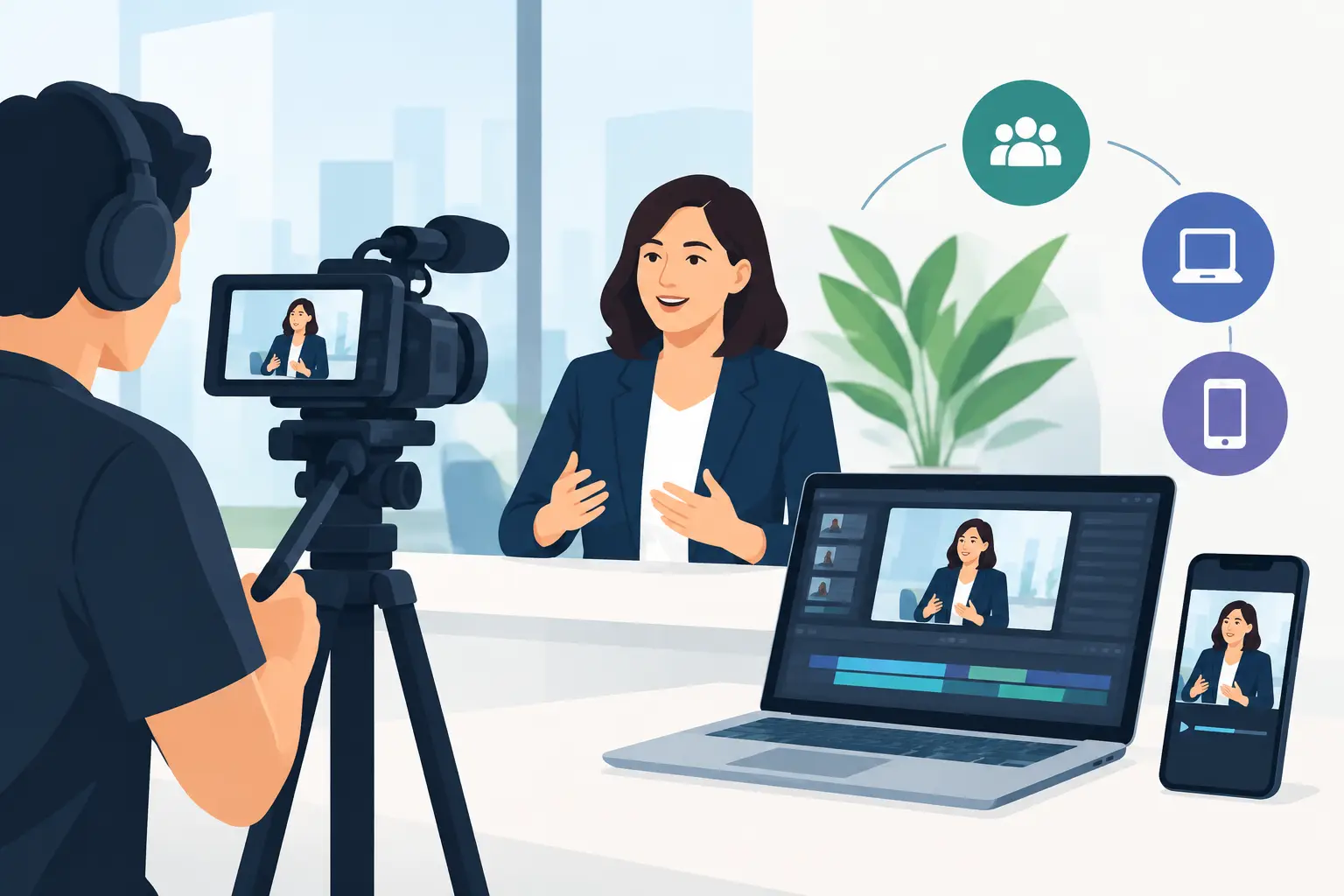
If your campaign will appear across LinkedIn, YouTube, paid social, internal channels, digital displays, and event screens, each platform may need a different version. Horizontal, vertical, and square framing affect how shots are composed. Captions matter when a video is watched without sound. Short edits need a stronger opening beat than a longer case study. Event content may need cleaner graphics, larger type, and an edit that works in a room full of distractions.
This does not mean every project needs dozens of deliverables. It means the production scope should match the real use case. A focused internal announcement may only need one master edit and captioned versions. A major campaign may need a hero film, cutdowns, social-first edits, photography, interview clips, and selected raw materials for future use.
The trade-off is simple. More outputs require more planning, capture time, editing, and approvals. But producing related assets from the same shoot is often more efficient than returning to set weeks later because one channel was overlooked.
Production Day Is Where Planning Becomes Trust
A smooth shoot does not happen by accident. It comes from preparing the crew, equipment, schedule, contributors, locations, and backup plans before the first shot.
Corporate filming often takes place in working environments. Offices, factories, retail spaces, conference venues, construction sites, and live events all come with limitations. There may be restricted access, changing light, loud equipment, safety rules, limited time with executives, or a venue schedule that cannot move. A capable production team works within those realities while protecting the quality of the final footage.
That starts with the right setup. Professional cameras matter, but lighting and sound are equally important. A well-lit interview feels intentional. Clean audio makes a spokesperson easier to trust. A coordinated crew can capture multiple angles, supporting footage, photography, and event moments without turning the location into a disruption.
For leadership teams, preparation is especially valuable. A short pre-interview or briefing can help a spokesperson understand the message, avoid overly scripted delivery, and use their limited time efficiently. The aim is not to make people sound perfect. It is to help them communicate with confidence.
Kals Studio approaches this stage as a managed production, not a camera drop-in. Creative direction, crew coordination, on-site execution, and post-production need to work as one process. That is how the experience stays organized for the client while the final result still feels considered and alive.
Editing Turns Footage Into a Usable Asset
Raw footage is not a finished communication tool. The value of a corporate video is created in the edit, where interviews, action, music, graphics, sound, pacing, and brand details are shaped into a message people can follow.
A strong edit knows what to leave out. It does not try to include every talking point from every stakeholder. It chooses the moments that carry the story forward, then supports them with visuals that make the message specific. The result should feel concise without feeling rushed.
Brand consistency also matters here. Typography, color treatment, motion graphics, music, and logo placement should support the organization’s identity without overpowering the message. For some brands, that means a controlled, premium visual style. For others, it means energy, movement, and a more immediate social-first rhythm. Neither approach is automatically better. The right choice depends on the audience and the job the video needs to do.
Feedback is part of the process, but it works best when it is structured. Consolidated comments from a designated project lead prevent conflicting requests and unnecessary revision cycles. Clear feedback tied to the agreed objective is more useful than general notes such as “make it more exciting.” If a section feels weak, identify whether the issue is pace, clarity, tone, length, or missing information.
Measure Usefulness, Not Just Views
Views can be useful, but they rarely tell the whole story. A video for internal communications may be successful because employees understand a new direction. A sales video may be successful because it helps representatives start stronger conversations. An event recap may be successful because it extends sponsor visibility and gives attendees a reason to share.
Before release, agree on the signals that matter. That could include completion rate, engagement, landing-page activity, lead quality, applicant response, event registrations, internal feedback, or how often the sales team uses the asset. These measures keep the conversation focused on business value rather than surface-level performance.
The strongest next step is to treat your next video request as a content decision, not simply a filming request. Define what the audience needs to understand, what your team needs to achieve, and where the finished work needs to live. From there, the production can be built to capture, craft, and deliver something people will actually use.