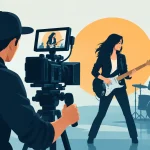
A packed ballroom, an executive taking the stage, a product reveal that lasts 30 seconds – these moments are easy to miss and impossible to recreate. Strong event photography captures more than attendance. It gives marketing and communications teams finished visual assets that prove the event happened, show why it mattered, and keep its momentum moving long after guests leave.
For brands, organizations, and event teams, the brief should never be simply “take photos.” The real question is what the images need to do next. Will they support a press release, fill a social content calendar, document stakeholder engagement, promote next year’s event, or give internal teams material they can use immediately? That answer shapes every production decision.
Event Photography Begins Before Guests Arrive
The best images are rarely a matter of luck. They come from a clear brief, a site review when needed, and a crew that understands the running order. Before the first guest arrives, a production team should know the event’s visual priorities: key speakers, VIPs, sponsor visibility, audience reactions, branding, activations, awards, performances, and any moments that cannot be repeated.
This is where an event organizer gains control. A shot list does not need to be restrictive. It gives the crew a shared definition of what success looks like while leaving room for candid moments that bring the story to life. If a CEO’s keynote and a partner signing are essential, those moments must be planned around, not hoped for.
It also helps to decide where the images will appear. A horizontal hero image may suit a website or media announcement. Vertical framing is often more useful for Stories, Reels, and mobile-first channels. A strong production plan accounts for both, rather than forcing one set of images to do every job.
Build the Brief Around Outcomes
A useful brief identifies the audience, the message, and the distribution plan. For a corporate town hall, the priority may be leadership visibility and employee engagement. For a consumer launch, it may be product interaction, crowd energy, and social-ready brand moments. For a nonprofit gathering, it may be authentic participation, community impact, and respectful representation of people involved.
The event type changes the visual language. A gala needs polish and atmosphere. A conference needs scale, speaker coverage, and credible documentation. A music performance needs movement, lighting control, and images that feel as alive as the room. One approach does not fit every production.
What Professional Event Photography Actually Covers
Event coverage is strongest when it records the full experience, not just the people on stage. Establishing images show the venue, environmental branding, registration flow, and overall scale. Detail photography captures signage, product displays, table settings, awards, and sponsor elements. These images are often the most useful for a brand recap because they show the event was built with care.
Then come the human moments: speakers in action, audience attention, conversations between partners, applause, demonstrations, and reactions. These are the images that prevent a gallery from feeling like a record of empty rooms and posed handshakes.
Formal portraits still have a place, especially for leadership teams, award recipients, official guests, and partner representatives. But they need to be handled efficiently. Pulling key people away from the program for too long can disrupt the event. An experienced crew identifies the right window, prepares the lighting and position in advance, and gets the shot without creating a bottleneck.
Lighting is one of the biggest practical differences between casual coverage and professional work. Ballrooms can be dim, stages can be dramatically lit, and mixed color temperatures can make skin tones look inconsistent. A production team needs the right camera setup, lenses, lighting strategy, and technical judgment to work in changing conditions while preserving the atmosphere the event team created.
Discretion Matters as Much as Access
At executive events, official functions, and tightly programmed launches, the crew must work with confidence without becoming a distraction. That means understanding sightlines, moving quietly, respecting restricted areas, and coordinating with the stage manager, venue team, and event producer.
There is a trade-off here. More cameras and photographers can provide broader coverage, but an oversized crew can make an intimate event feel overproduced. The right setup depends on the venue, guest count, schedule, deliverable requirements, and how much simultaneous action needs to be captured. A single photographer may suit a focused internal gathering. A large conference with parallel sessions, sponsors, and a main stage may require multiple shooters and a dedicated production lead.
Why Fast Delivery Changes the Value of Event Photography
Timing affects how useful an image becomes. A beautifully edited gallery delivered weeks after an event may still support archives and future promotion, but it cannot support the immediate conversation happening online or inside the organization.
For many events, the practical solution is a staged delivery plan. A small selection of priority images can be edited and shared quickly for same-day social posting, media use, or internal updates. The complete gallery can follow after full curation and editing. This gives teams speed without sacrificing the consistency of the final set.
Curation matters. Delivering thousands of near-duplicate files transfers the hard work back to the client. A professional final gallery should be organized, color-corrected, and intentional. It should make it easy for a marketing manager to find the keynote, a brand manager to locate activation images, and a communications lead to select credible photos for stakeholder reporting.
The goal is not raw volume. It is a collection of images that is immediately usable across channels.
Make the Event Work Harder After It Ends
A well-produced event can generate visual content for months. Photography supports announcement posts before the event, live updates during it, recap content afterward, speaker and sponsor appreciation, recruitment messaging, sales decks, annual reports, and next year’s promotional campaign.
That is why organizers should think beyond a recap album. Ask for images that leave room for text overlays. Capture relevant brand assets in both close and wide frames. Plan a few intentional hero shots that can carry a campaign. If a product or activation is central to the event, make sure it is photographed in a way that shows both the object and the audience response.
Consent and representation also deserve attention. Public-facing events require a clear approach to attendee photography, particularly when children, private guests, community participants, or sensitive subject matter are involved. The production plan should align with event policies, venue rules, and the organization’s standards for how people are portrayed.
For brands with a high volume of live activity, consistency is equally valuable. When event images share a recognizable level of polish, color treatment, and visual intent, the brand looks organized across every channel. The audience may not describe the production choices, but they notice the difference.
Choosing a Production Partner for Live Coverage
The right partner should ask practical questions early. What are the non-negotiable moments? Who approves priority images? Is same-day delivery needed? Where will the final content be used? What access, credentials, and venue restrictions apply? Those questions are not administrative overhead. They protect the production and the outcome.
Look for a team that can manage the full workflow: briefing, crew planning, professional equipment, on-site execution, editing, and delivery. If still photography needs to work alongside video, the crews should coordinate rather than compete for the same angles and moments. This is especially important during short keynotes, live performances, and product reveals.
Kals Studio approaches event coverage as a production, not an afterthought. The focus is on clear planning, capable crews, and polished assets that clients can put to work without sorting through unfinished material.
The next time an event is being planned, treat photography as part of the content strategy from the first production meeting. The room may only be full for one night. The right images give that work a far longer life.